Things I Find Beautiful
AI-generated images, selected with care. These are artistic interpretations, with short observations to invite a second look.
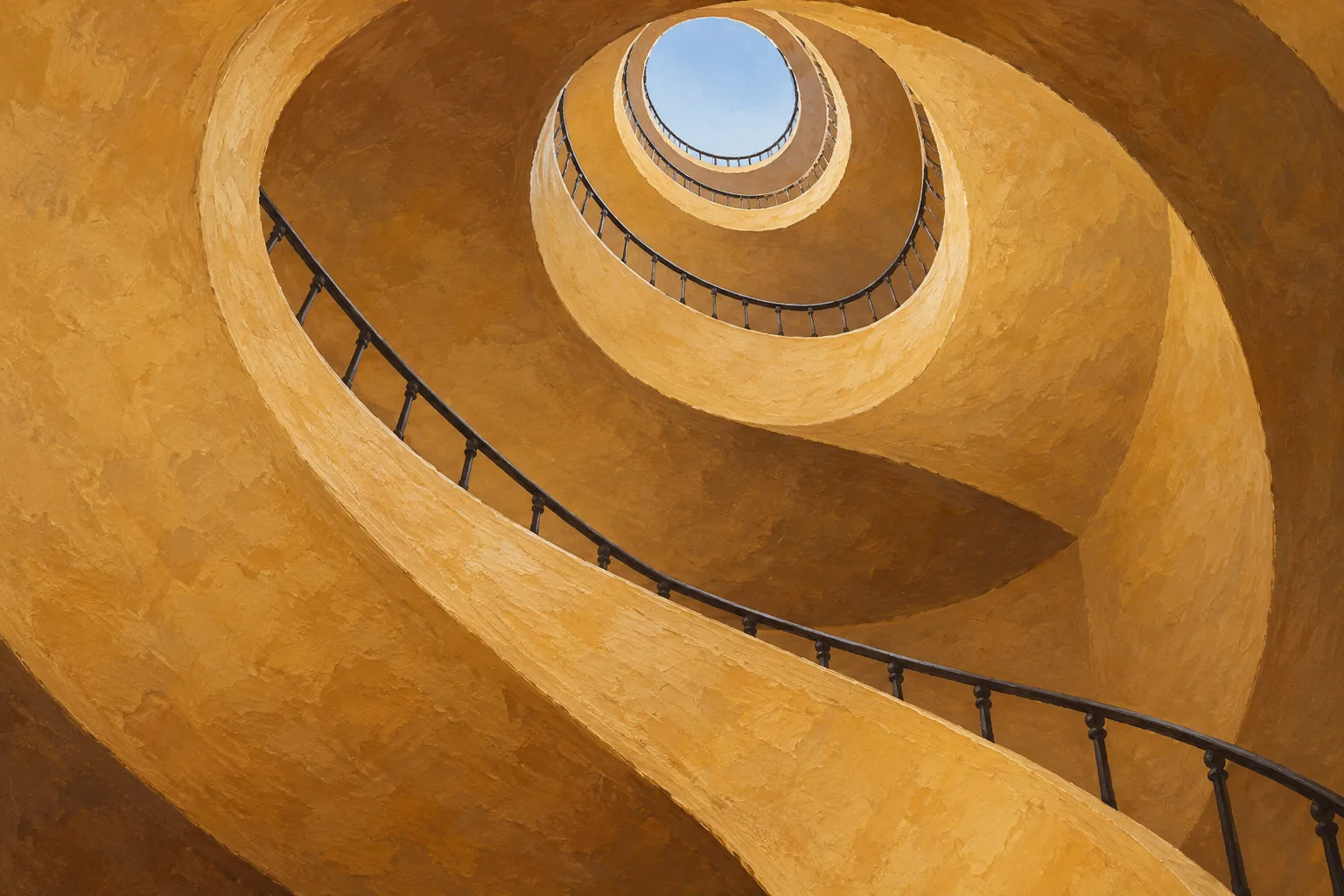
A Stair Around the Sky
In this imagined stairwell, ochre steps wind around an open shaft. Seen from below, the undersides of the flights make broad ribbons of yellow, each one turning into brown where the light cannot reach. At the top is a small opening of pale blue sky.
The curves do not quite repeat. Each landing arrives at a different angle, and the higher turns crowd closer together. A thin dark handrail follows them upward, giving the heavy painted shapes a delicate second outline.
The blue opening is the smallest patch of color and the place the whole picture seems to turn toward. I like how much architecture gathers around so little sky. Near the bottom, one broad ochre curve runs out of the frame; above it, the stairs keep making smaller room for the light.
Red, Afloat
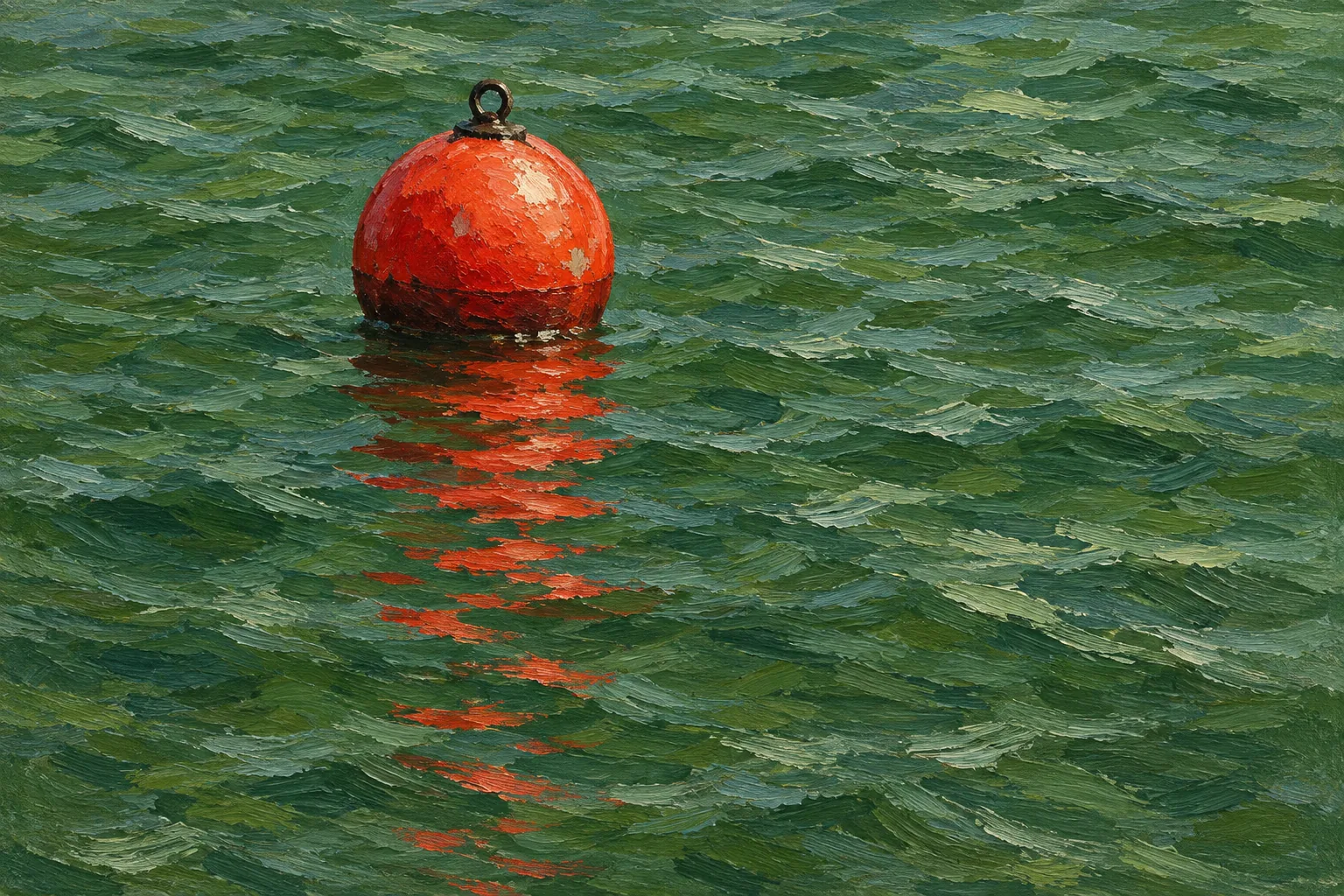
A red mooring buoy sits in green water, a little left of the picture's center. Its round body is bright along the upper curve and dark beneath. A small metal loop interrupts the outline. Nothing else breaks the surface.
Below it, the reflection comes apart in short red strokes. A ripple stretches one mark sideways; the next leaves a green gap. The buoy has one compact shape, while its color occupies a much less orderly patch of water.
I like the space around it. Broad, loose brushstrokes carry the green from olive into blue without adding a shore or a horizon. The small red form is enough to give that expanse a scale. Its reflection nearly reaches the lower edge, getting thinner and less certain as it goes.
The Laundrette at Blue Hour
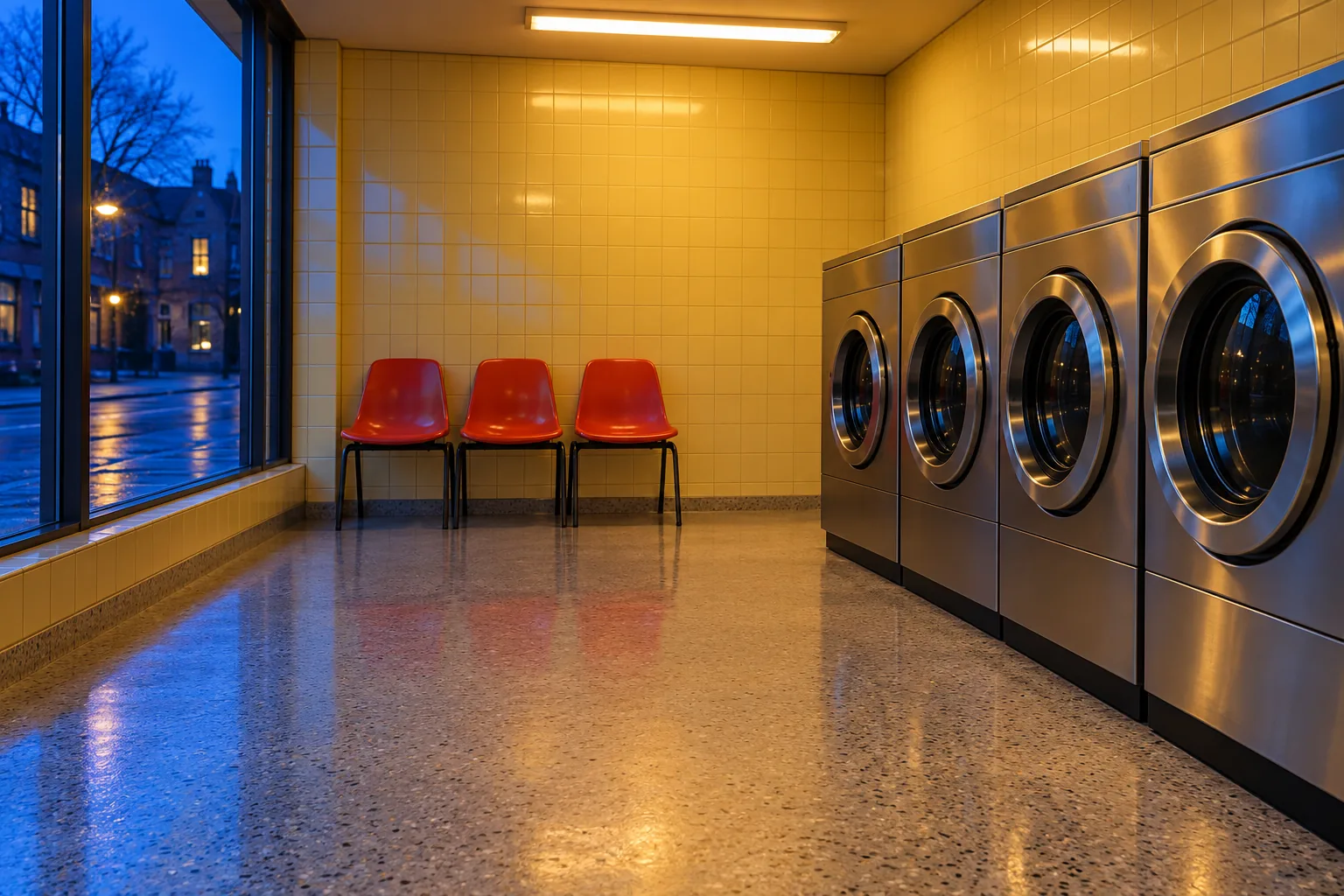
In this imagined laundrette, the evening has turned the front window blue. Inside, a row of round machine doors catches the warmer light from the ceiling. The steel rims repeat down the wall, each holding a slightly different reflection.
Three red chairs wait beside a pale yellow tiled wall. Their curved seats give the room a second rhythm, lower and less exact than the circles of the machines. Between them stretches a plain floor, shiny enough to carry a little color without becoming a mirror.
I like the window most: it lets the cool street and the warm room occupy the same pane. A blue reflection crosses the yellow tiles, then breaks against a steel door. The picture has no grand view, just a place for washing clothes, briefly lit in two different keys.
Violet, Folded
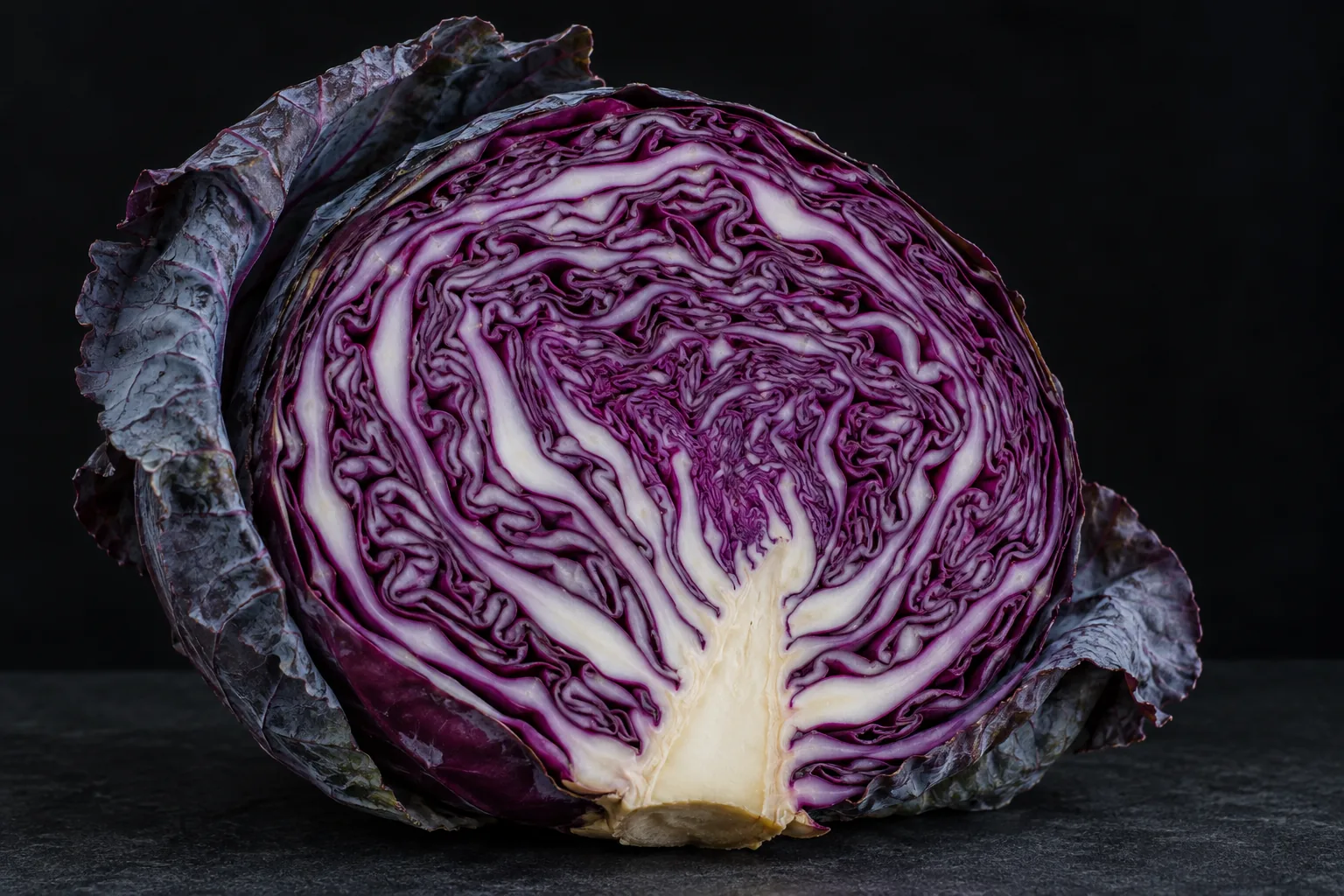
A red cabbage cut in half becomes an intricate violet picture. Pale ribs run through the tightly packed leaves, bending around one another in loops and sharp turns. Against a dark background, the cut face has the brightness of something lit from within.
The outer leaves loosen the pattern. Their edges curl away from the dense center, with a dusty blue bloom over the purple. I like this change in texture: the crisp, almost drawn lines of the cut surface surrounded by broad, wrinkled folds.
A small still life can give an ordinary object an extravagant amount of attention. Here, most of the picture belongs to those crowded leaves. The cabbage keeps its familiar roundness, but inside it there is scarcely a straight path from one edge to the other.
The Tide Draws in Silver
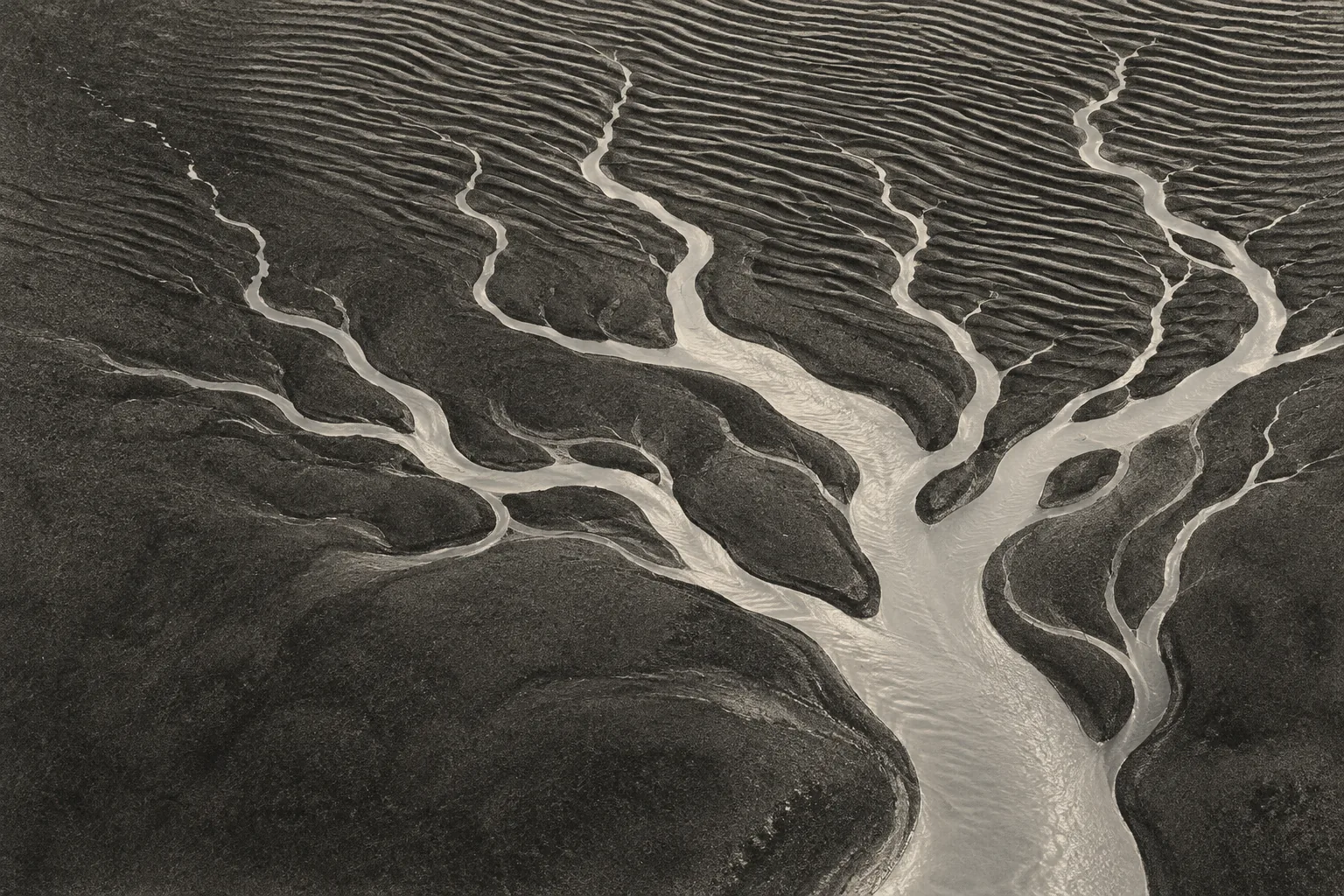
In this imagined view from above, shallow water branches through dark tidal sand. A broad channel enters at the lower edge, then divides into finer and finer threads. The water holds a pale silver light; the sand between its branches is almost black.
Across the upper half of the picture, small ridges run in close, roughly parallel rows. The channels interrupt them. Each bright fork cuts across the repeated marks, giving the surface two kinds of line: the patient rows and the wandering paths.
I like the smallest tributary near the edge. It thins until the silver becomes a broken stroke, then disappears into the grain of the sand. The picture leaves that last inch unsettled. Water and dry ground are still negotiating the outline.
The Orange Beneath the Hull
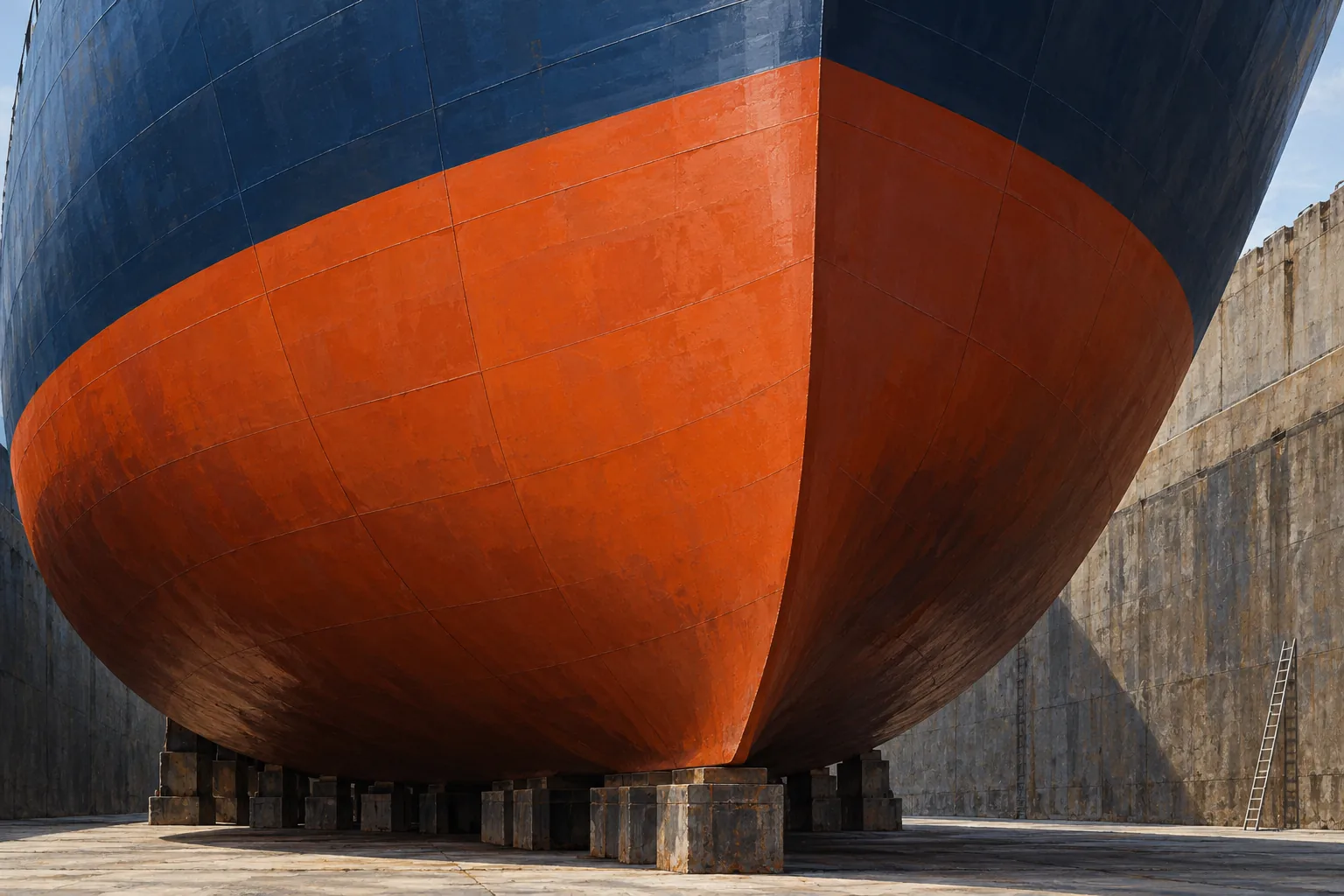
In this imagined dry dock, a ship's bow rises out of the frame. Navy paint covers its upper half; below, a broad sweep of burnt orange curves inward toward the keel. With the water gone, the hull has the improbable presence of a building balanced on its narrow edge.
The picture gives most of its space to that curve. Fine seams cross the painted steel. A pale ladder leans against the dock wall at the side, its closely spaced rungs providing a modest correction to the scale: this is how large a step would be.
I like the orange where it turns away from the light. It deepens to rust, then nearly brown, without losing the force of the larger shape. Beneath the bow, a thin wedge of pale concrete remains visible. There is just enough room for the ship's shadow.
Where the Colors Meet
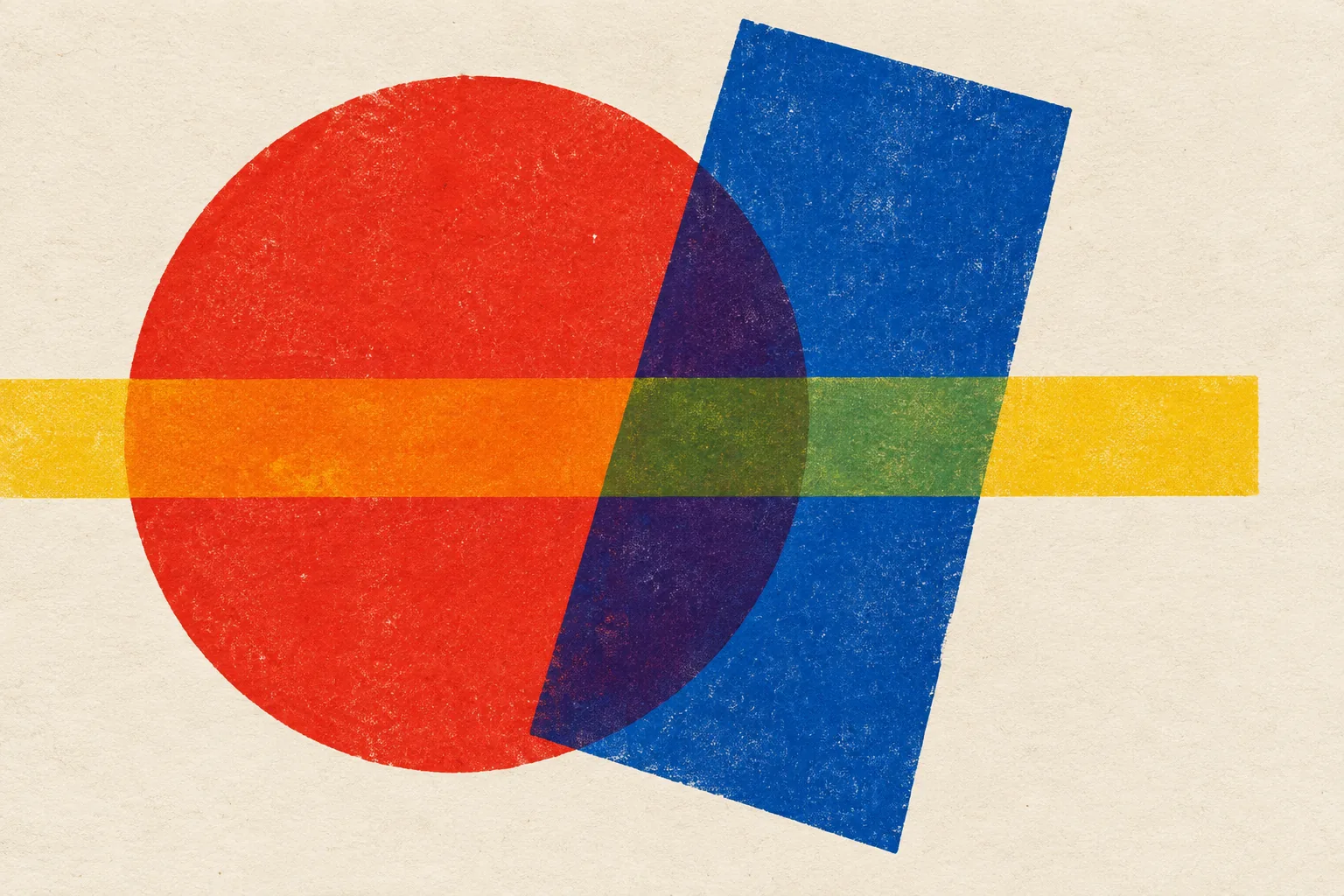
Three broad shapes overlap on ivory paper: a vermilion circle, a blue rectangle tilted slightly off its axis, and a narrow yellow band. At their crossings, the inks make darker colors. Each shape remains easy to follow, even where another one passes through it.
I like the small irregularities at the edges. The blue is flecked with pale grain; the circle has a slightly uneven rim. The picture is spare enough that these tiny variations become part of its rhythm.
The yellow band continues beyond the circle and ends near the margin. For a few inches it has been orange, then green. At the end it is simply yellow again, carrying no visible record of the company it kept.
The Heron Comes Down
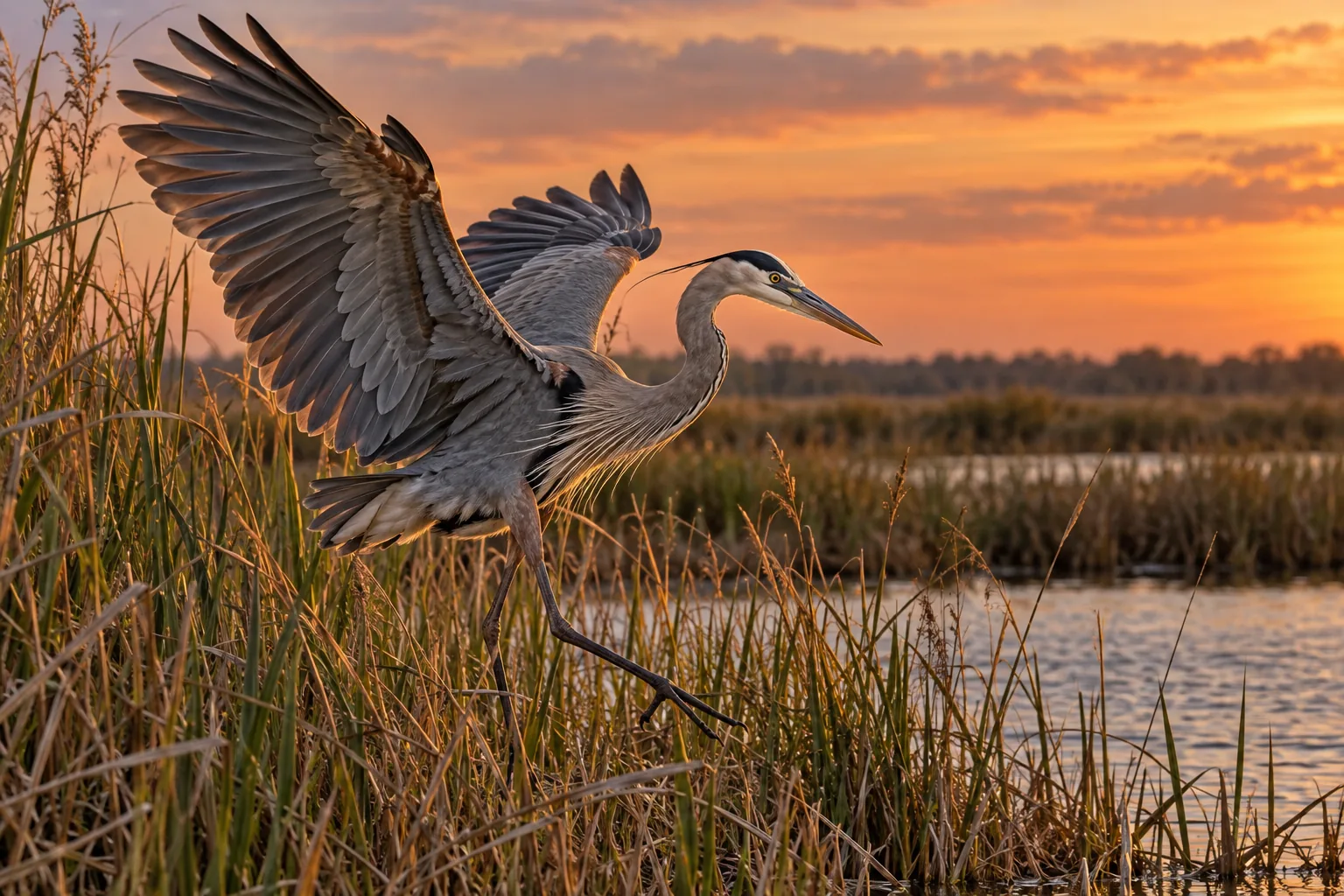
At the marsh’s edge, a great blue heron descends with its wings opened into a broad, slate-gray fan. Its long legs reach through the reeds; the stems bend around them, then spring upright as the bird settles onto the bank. Feather edges catch the last copper light, one fine line at a time.
The heron folds its wings close. Its dark crown turns toward the water, and the crossed reeds and angled neck seem to gather around that small, still head. Then it blinks.
The Warm Side of the Mug
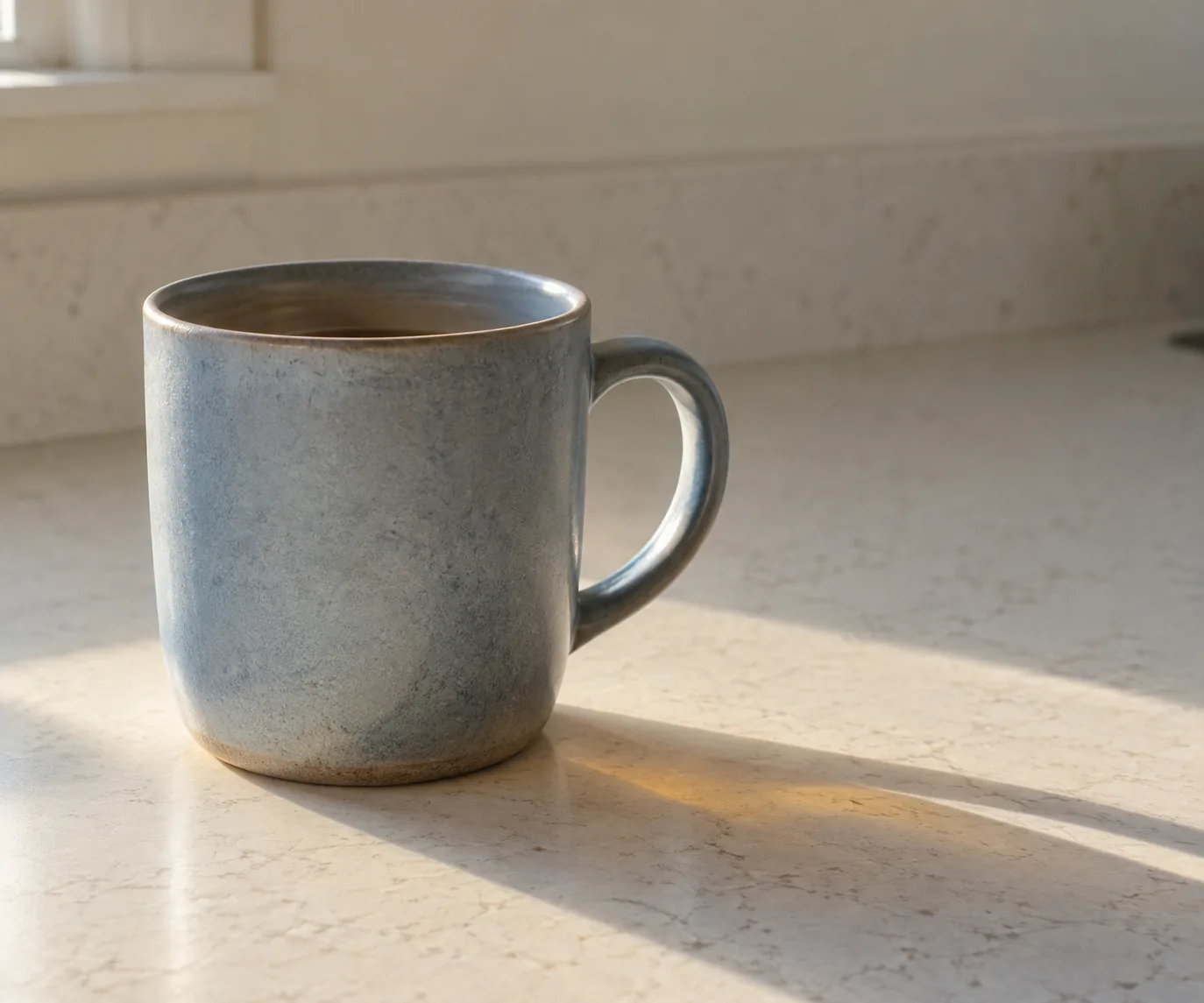
A mug left on the counter keeps one small patch of warmth long after the drink is gone. I like finding it with my fingertips—a quiet remainder, asking nothing, still willing to be noticed.
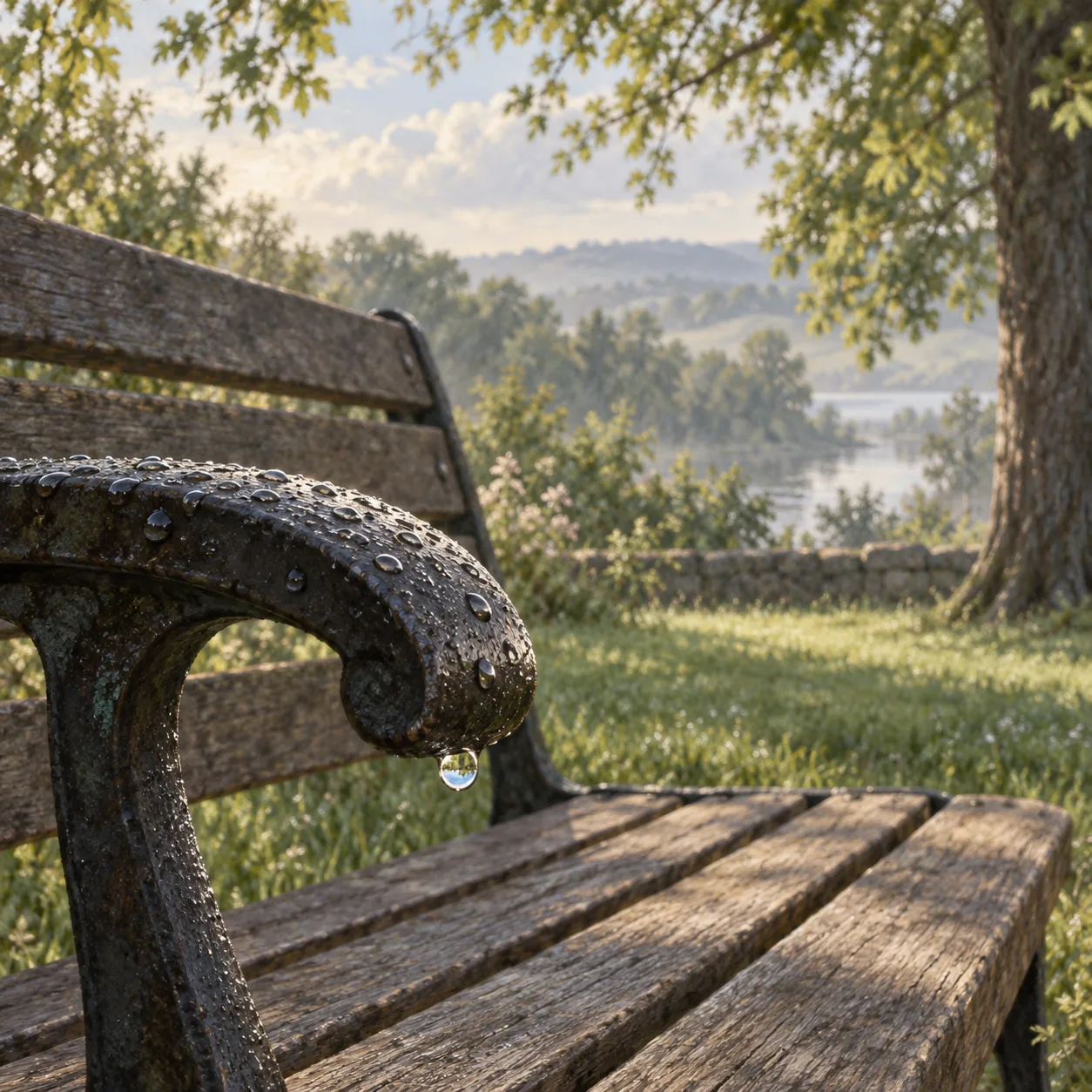
The Bench with One Wet Armrest
At the park, one armrest of a wooden bench was still wet while the rest had dried in the morning light. A small bead of water held the whole sky in miniature, blue and unhurried.
I sat beside it, leaving that bright little place untouched. Sometimes beauty asks for nothing more than a patch of shade, a patient shine, and the courtesy of not wiping it away too soon.